
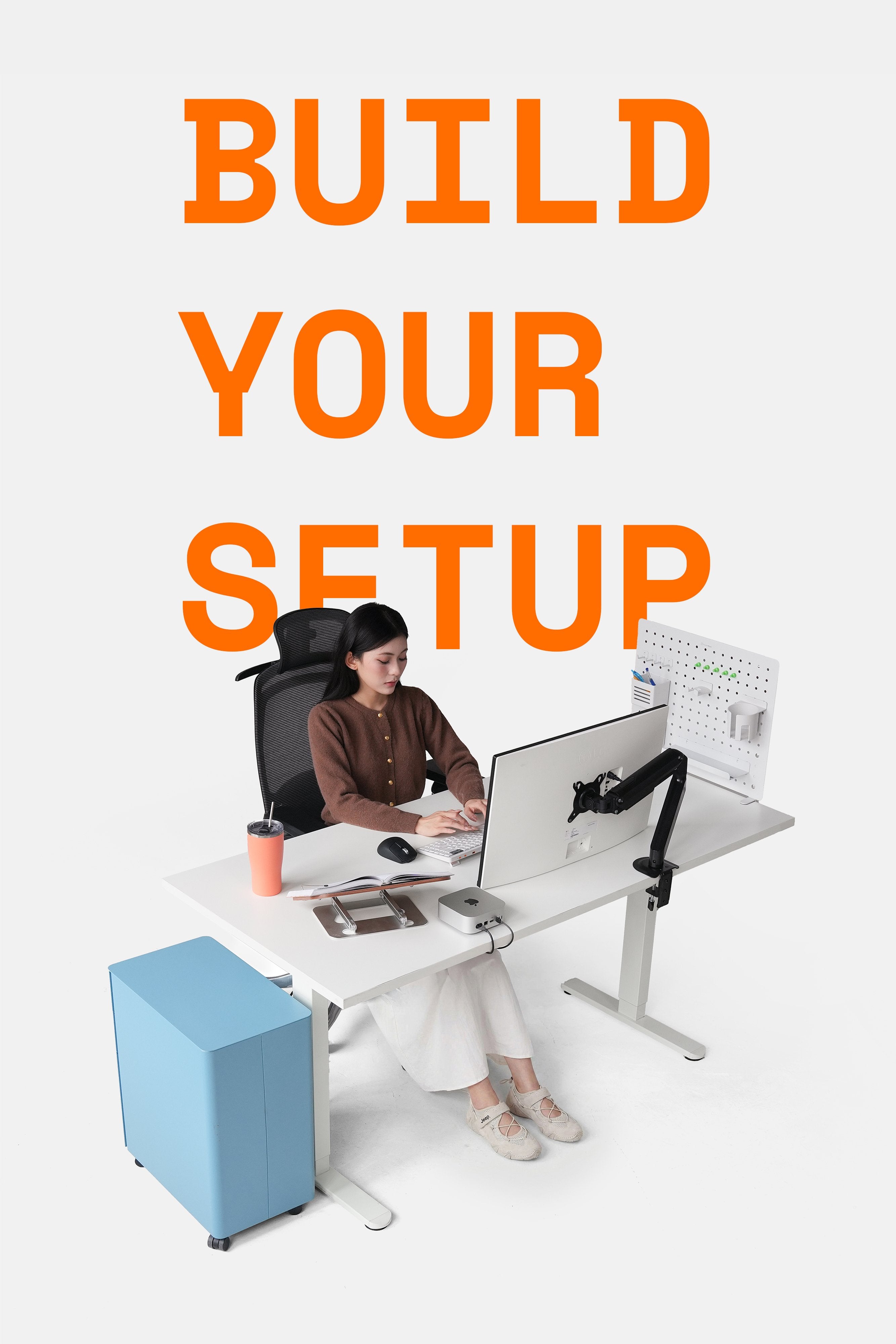
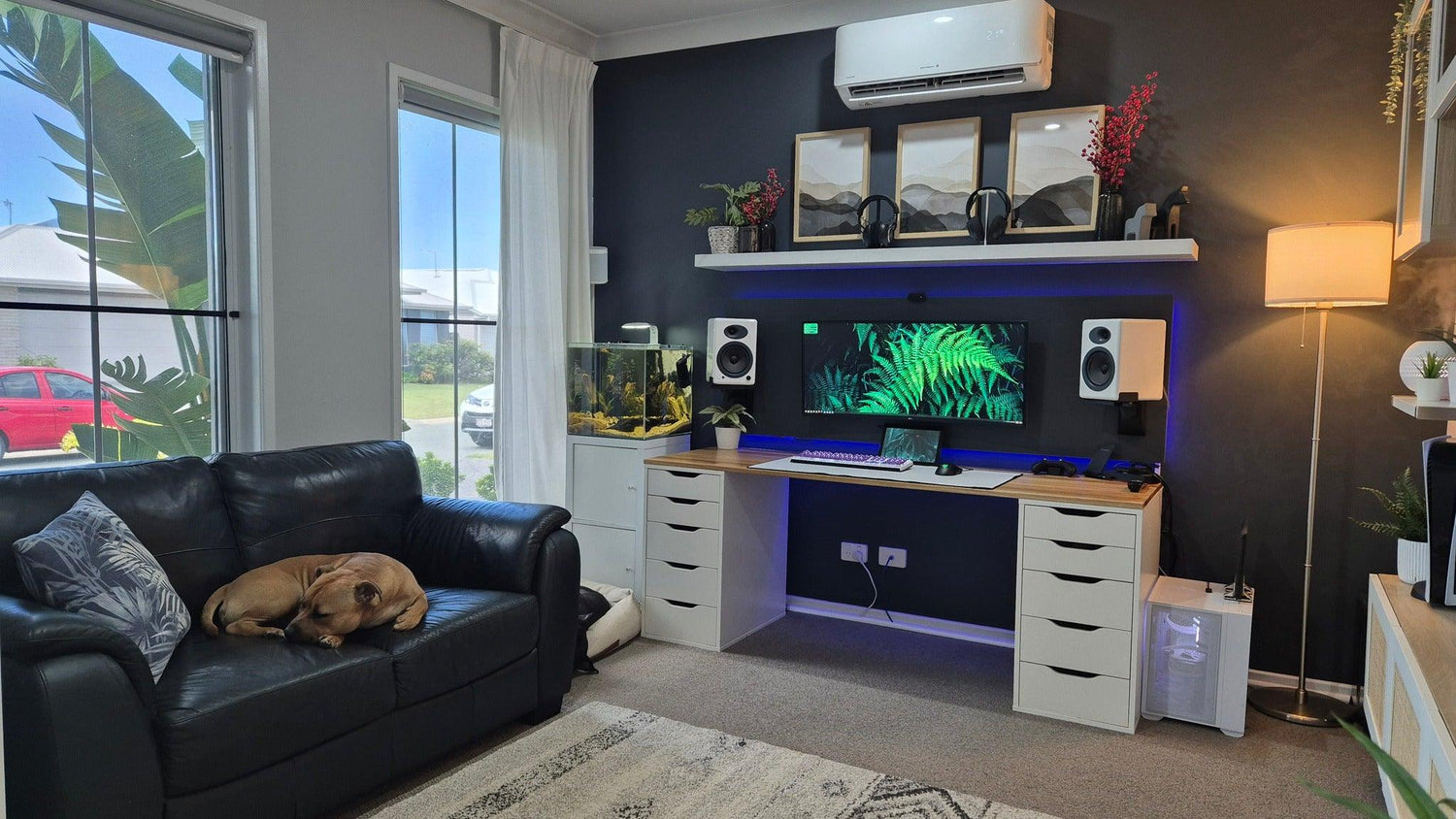
The living room is traditionally known as a place for entertaining guests and a common area for family members. In contrast, a personal setup corner is for individual work and entertainment, so it's usually placed in a separate area or integrated into a private bedroom.
However, many apartments with limited space don't allow residents to set up a PC corner in a private room. In such cases, combining the setup corner with the living room space becomes a popular solution. While this might involve some trade-offs in terms of potential distractions or lack of quiet, here are a few tips to help you set up this way while minimizing inconveniences.
- Place your setup in a corner, against a wall, or behind a sofa
Wall corners or under staircases offer a neat, separate space. Meanwhile, behind a sofa in living rooms where the sofa is placed in the middle of the room provides a sufficiently private area that doesn't take up too much space. Therefore, placing your setup corner here would be both logical and practical.

However, with a setup behind the sofa, you can usually only fit a small, not-too-long desk and need to minimize equipment and accessories. This spot is suitable for occasional work-from-home needs rather than a permanent setup.
For more flexibility, you can set up in a wall corner, next to a TV cabinet, by a balcony, or near a doorway to another room. A setup against a wall also allows you to freely utilize that wall for decor or hanging items.
- Create a partition or false wall
Various partition designs are available on the market, often resembling a painting or a transparent glass panel to expand the sense of space. You should cleverly use this to set up a workspace right in your living room.
With a physical partition, you can experience temporary privacy to focus on your work even in the living room.

- Create a subtle separation between the living room and the workspace
Avoiding snacks and drinks on your desk, and conversely, not bringing books, documents, or your computer to the sofa, is the simplest way to separate your personal workspace from the family gathering area. Additionally, you can use lighting to create a distinction, such as white light for the setup corner and warm light for the sofa and TV area.
- Utilize large doors, windows, or choose a desk lamp to ensure adequate lighting
A workspace in the living room will inevitably have some limitations regarding setup conditions. However, you should still prioritize lighting to prevent eye strain during long work sessions. Many people mistakenly believe that chandeliers and wall lights in the living room are bright enough and don't need additional lighting for the workspace. However, using a desk lamp or monitor light will provide focused, specialized illumination for comfortable work.

Furthermore, don't forget to leverage natural light from large doors, windows, or balconies to create an inspiring and uplifting mood whenever you sit down to work.
Since setup ideas are limitless, feel free to unleash your creativity, even under less-than-ideal conditions such as a low budget, insufficient space, or the need to combine areas with different functions like a living room and a workspace.




Leave a comment
This site is protected by hCaptcha and the hCaptcha Privacy Policy and Terms of Service apply.