
Are you a night owl (someone who tends to go to bed between 2-2:30 AM and wake up at 10 AM) or an early bird (someone who sleeps from 11 PM and wakes up at 6:30 AM)? Understanding how your brain works to "diagnose" your biological clock type will help you discover your strengths and weaknesses at different times of the day, thereby optimizing your workflow and accurately tracking your work efficiency.
To find out your preferred, most comfortable, and most productive sleep schedule, you can try going to bed without an alarm clock or any pressure to wake up at a specific time.
- If you don't feel too sleepy after midnight, you might be a night owl.
- On the other hand, if you feel alert and energetic from morning until nearly noon, you are an early bird.

HyperWork has compiled some tips you can apply if you are a night owl.
Maintain strict discipline during late-night work hours
Specifically, when you dedicate time to working late into the night, ensure it's a fixed schedule, perhaps from 10 PM to 3 AM, to maintain regularity. Before that, you should spend time on other activities such as exercise, chatting with friends and family, eating, or getting adequate rest to prepare your energy for your ideal work block.

Still maintain appropriate daytime work hours
Night owls can become more productive, work more smoothly, or even develop unique and novel ideas during late evenings and midnight. However, you should still pay attention to when to stop and avoid pushing your mind and body to work until morning.
The next day, you should also allow yourself to wake up and work at a more relaxed pace to avoid burnout, which can lead to exhaustion and decreased work performance.
Seek help from external factors
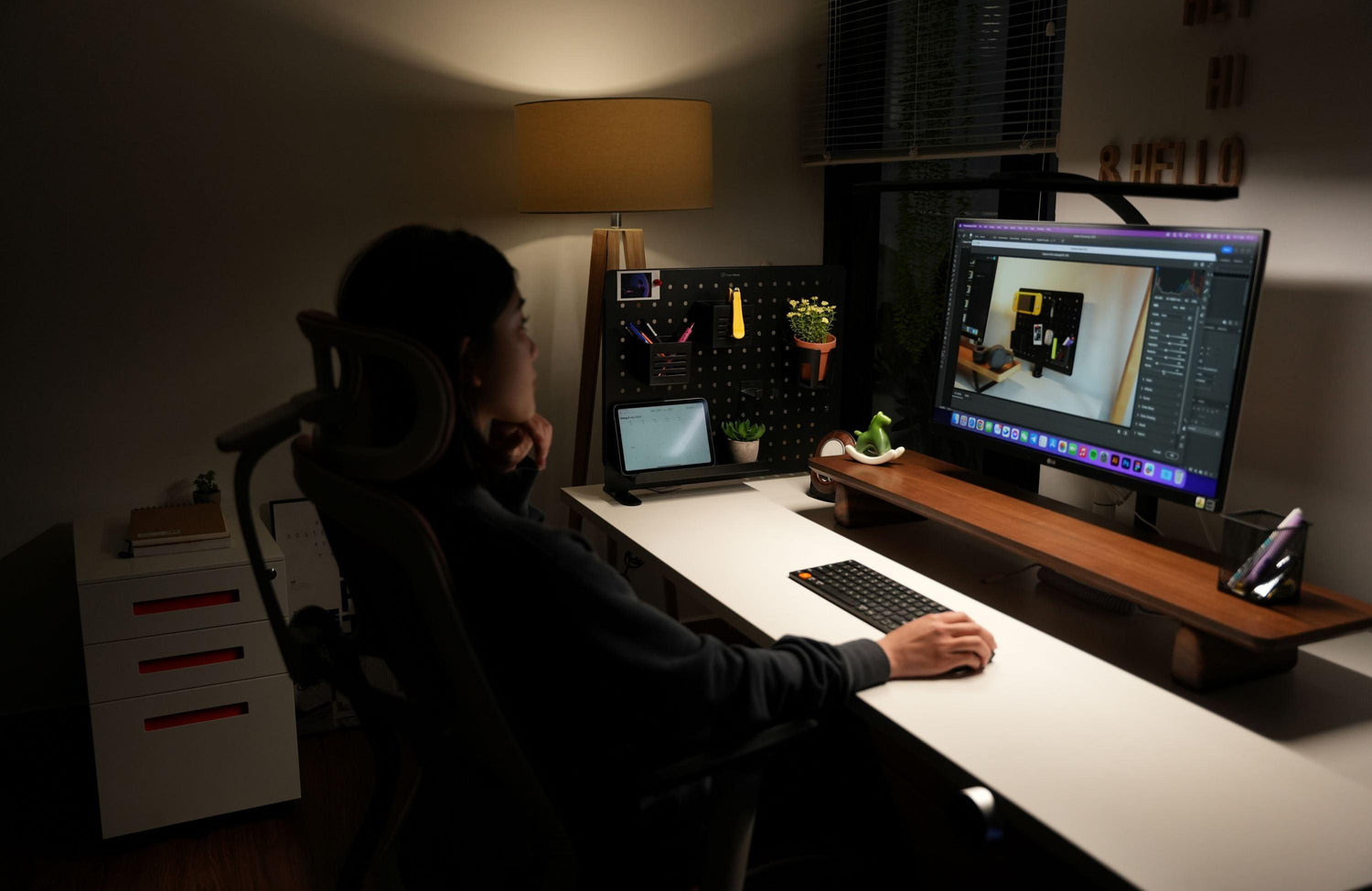
Working at night has the advantage of absolute quiet and focus. Many people also find novelty and breakthroughs when they truly "brainstorm" during this time rather than during the day. However, you will also need assistance or sufficient preparation to have the time and mental energy to concentrate on your work.
Many studies have shown that neutral or cool light provides a more alert feeling compared to warm, yellow light, which is suitable for relaxation and entertainment. Night workers can use appropriate desk lamps in their workspace, avoiding disturbance to other family members or creating effective focus for themselves. Desk lamps with wide illumination areas, anti-blue light features, and the ability to change light types to suit specific tasks, times, or user habits will be highly valued and chosen.

Additionally, you should prepare to stay away from your phone, social media, or recreational entertainment to avoid getting sidetracked and missing valuable work time. To be more proactive, you should also prepare documents and calculate figures in advance during the day so that when you focus on work, it becomes more convenient, faster, and more optimized.
Find your inspiration
Even if you are a night owl, you may not always be full of energy when you sit down to work, even during your ideal late-night hours. A playlist of soft music, a reward after a stressful major project, etc., can also be a good approach.
In particular, you should also pay attention to your health. If you don't feel truly alert, stop staying up late for 1-2 days to recover before returning to your routine.

Fundamentally, early birds are still considered to have a healthier lifestyle, preventing health problems and better balancing life (work or leisure). However, night owls can still establish good habits and improve performance with the small tips mentioned above.



Leave a comment
This site is protected by hCaptcha and the hCaptcha Privacy Policy and Terms of Service apply.