
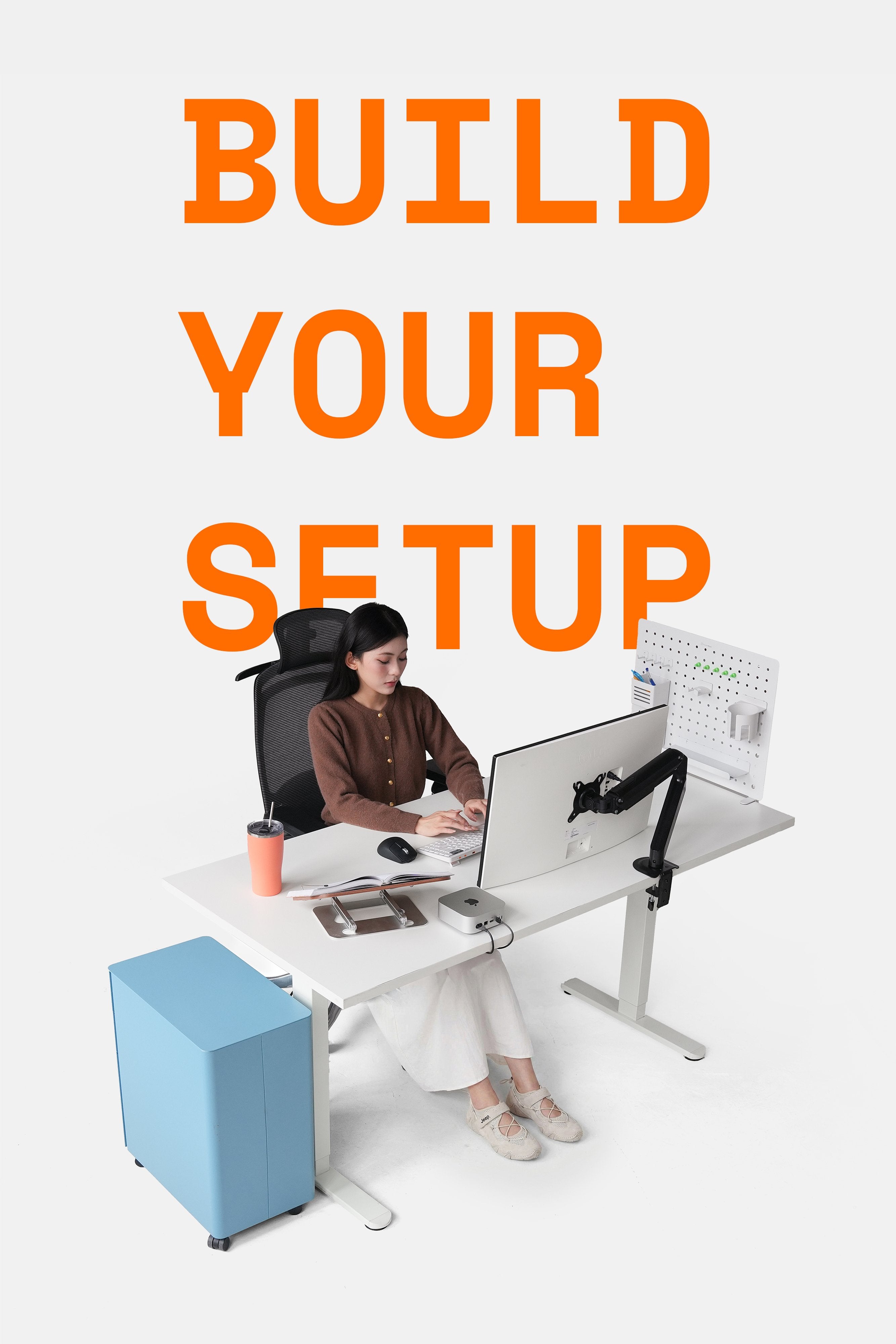
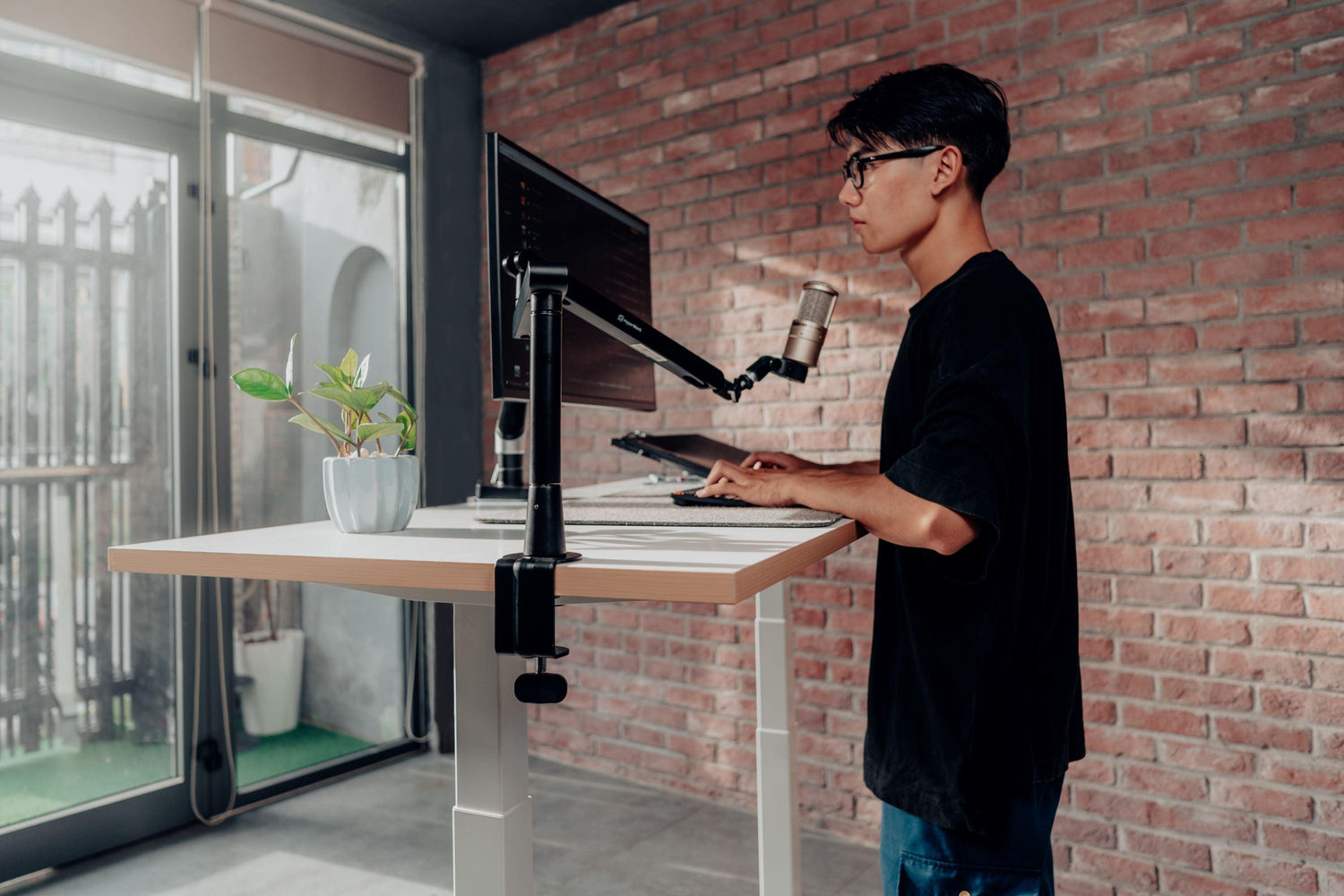
Aware of the harmful effects of sitting for 8-12 hours continuously each workday, many users have shown interest in standing desks. This type of desk can change its height to suit all generations, genders, heights, and body types; it also becomes a powerful assistant to help you form the habit of alternating between sitting and standing (changing every 30 minutes).
But how do you adjust the desk height to be just right and ergonomically sound? What factors will affect the desk height? Let's find out with HyperWork!
The height of the desk depends on many factors, among which the user's body height can be considered the most important. Taller users will need to raise the desk higher to avoid hunching. Meanwhile, shorter users will need a desk that fits them to avoid putting pressure on their head, shoulders, and neck. The advantage of standing desks is evident here. You can determine the appropriate desk height based on your own height, for both working while sitting and working while standing.

In addition to body height, users can also consider factors such as elbow position and monitor position to adjust the desk height appropriately. Why this variation? Because for the same height, people with long legs and short torsos or vice versa will have slightly different ideal desk heights.
- Elbow position: The angle of your elbows when typing will create comfort for your entire arm, reducing pain and fatigue after long periods of typing or drawing. An angle of 90-100 degrees is ideal.

- Monitor position: Typically, the distance from your eyes to the monitor should be between 50-70 cm. The monitor should be placed at or slightly below eye level. The center of the screen is usually about 15-20 degrees below eye level.

With the advantage of adjustable height, users can "fine-tune" to create a natural and comfortable sitting and standing posture. Parts like the neck, shoulders, and legs are relaxed, and especially the spine is not strained.
Finding the optimal height for a standing desk requires considering various factors and personal needs. Using a standing desk offers many benefits, from helping you sit/stand in a natural posture to reduce discomfort, to partially preventing the risk of chronic diseases.



Leave a comment
This site is protected by hCaptcha and the hCaptcha Privacy Policy and Terms of Service apply.