
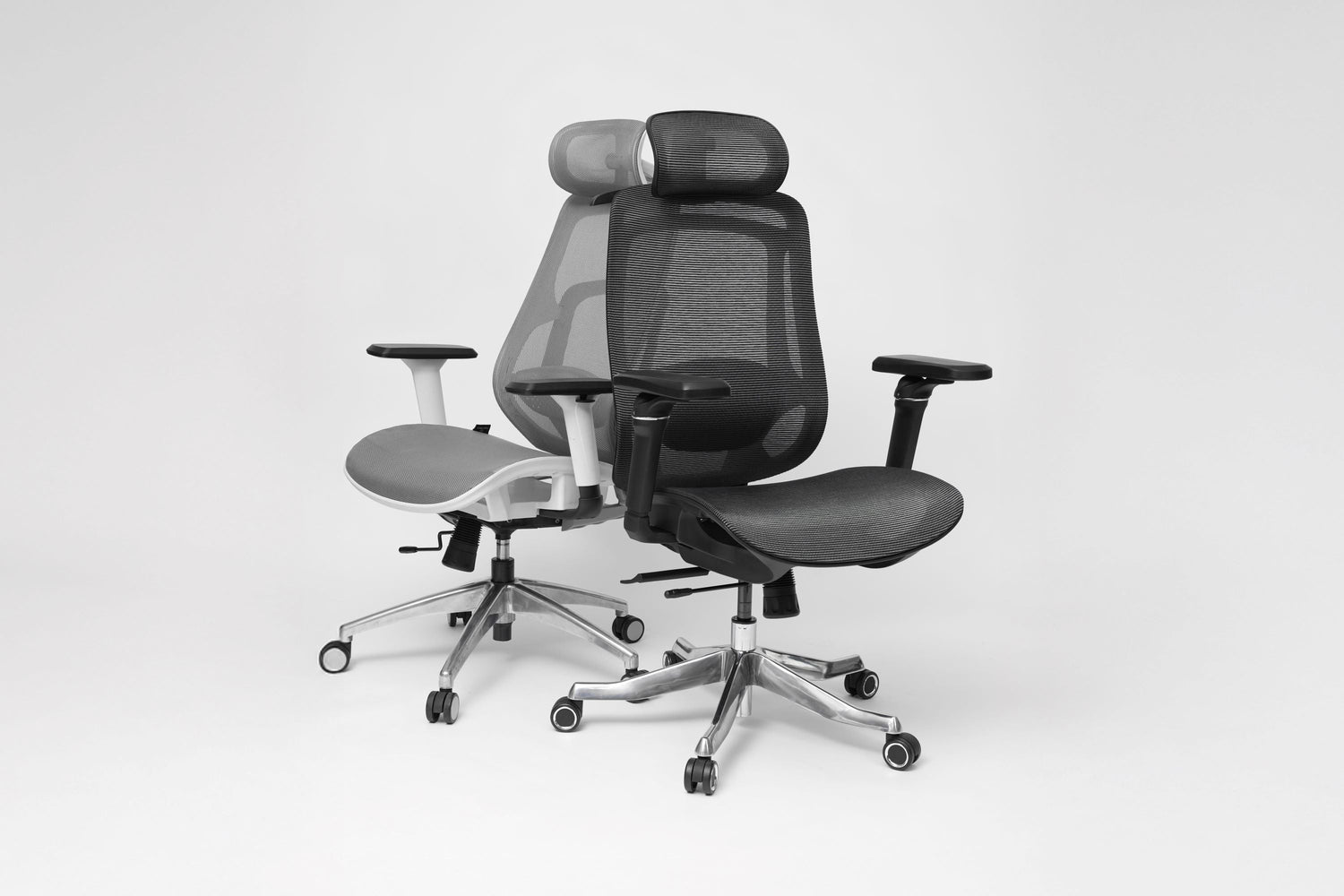
HyperWork ergonomic chairs are continuously being released, making it easier for office workers, students, freelancers, and others to access chairs with customizable features that suit different body types and conditions. Both Airy and Airy Pro are chairs in the 3-4 million VND segment, both aiming for comfort and durability, but each product model caters to specific user needs. Let's explore the differences/upgrades between the two chair models to easily answer the questions: Who is Airy suitable for? And who should choose Airy Pro?
The min-max height when adjusted is a clear difference between Airy and Airy Pro:
- Airy: approximately 124 – 134cm
- Airy Pro: approximately 115 –123cm
If you pay close attention, you'll notice that for users with a modest height (under 1m65) or women – who often have smaller shoulders and a compact build – Airy Pro offers a significantly more comfortable and snug fit. The chair can be lowered further, meaning feet can easily touch the floor (or a footrest), reducing leg fatigue, thigh and calf muscle strain, or incorrect hip posture.

Meanwhile, individuals over 1m75 tall or with a taller build will find Airy more comfortable due to its longer backrest.

Another notable point is that Airy Pro has a wide armrest distance of up to 64cm, suitable for both individuals with broad shoulders and those who prefer an "open" and unrestricted seating feel.

Airy uses 3D armrests – allowing adjustment up/down, forward/backward, and left/right rotation. For most basic users, this is sufficient. However, if you frequently change your working posture or use multiple devices simultaneously (keyboard, mouse, drawing tablet…), then the 6D armrests on Airy Pro become… anything but superfluous.
6D armrests allow you to:
-
Flexibly adjust height to suit user height
-
Slide armrests forward/backward or sideways
-
Rotate inward or outward according to typing posture or resting position
-
Move closer to or further from the body to support posture or relax when resting...

For designers and streamers, this flexibility ensures both arms are always supported, reducing wrist numbness and shoulder fatigue. Conversely, if you only use the chair for general office work, Airy with its 3D armrests remains perfectly reasonable and economical.
Do you need optimal back support for long sitting sessions?
If you frequently sit for over 6 hours a day or have experienced lower back pain, this is a point of interest. Airy Pro is equipped with 2D Lumbar Support that can adjust both the height and tension of the mesh backrest.
The feeling of having a hand constantly supporting your lower back will be extremely important in helping to alleviate symptoms of lower back pain and fatigue.

Meanwhile, Airy features a backrest designed to gently hug the spine and still allows for a certain degree of lumbar curve adjustment. For those who don't sit continuously or frequently stand up and move around, this design is sufficient without needing a specialized back support mechanism.

Both Airy and Airy Pro feature a 3-level recline mechanism, allowing you to easily adjust for mid-session relaxation or a quick nap. However, Airy Pro has an advantage with a maximum recline angle of 125 degrees, slightly more than Airy's 120 degrees.
For those who need a deeper recline for comfortable rest, a slightly larger recline angle can make a difference in perception. However, if you only need a slight recline to relax your eyes, Airy is still a reasonable choice.

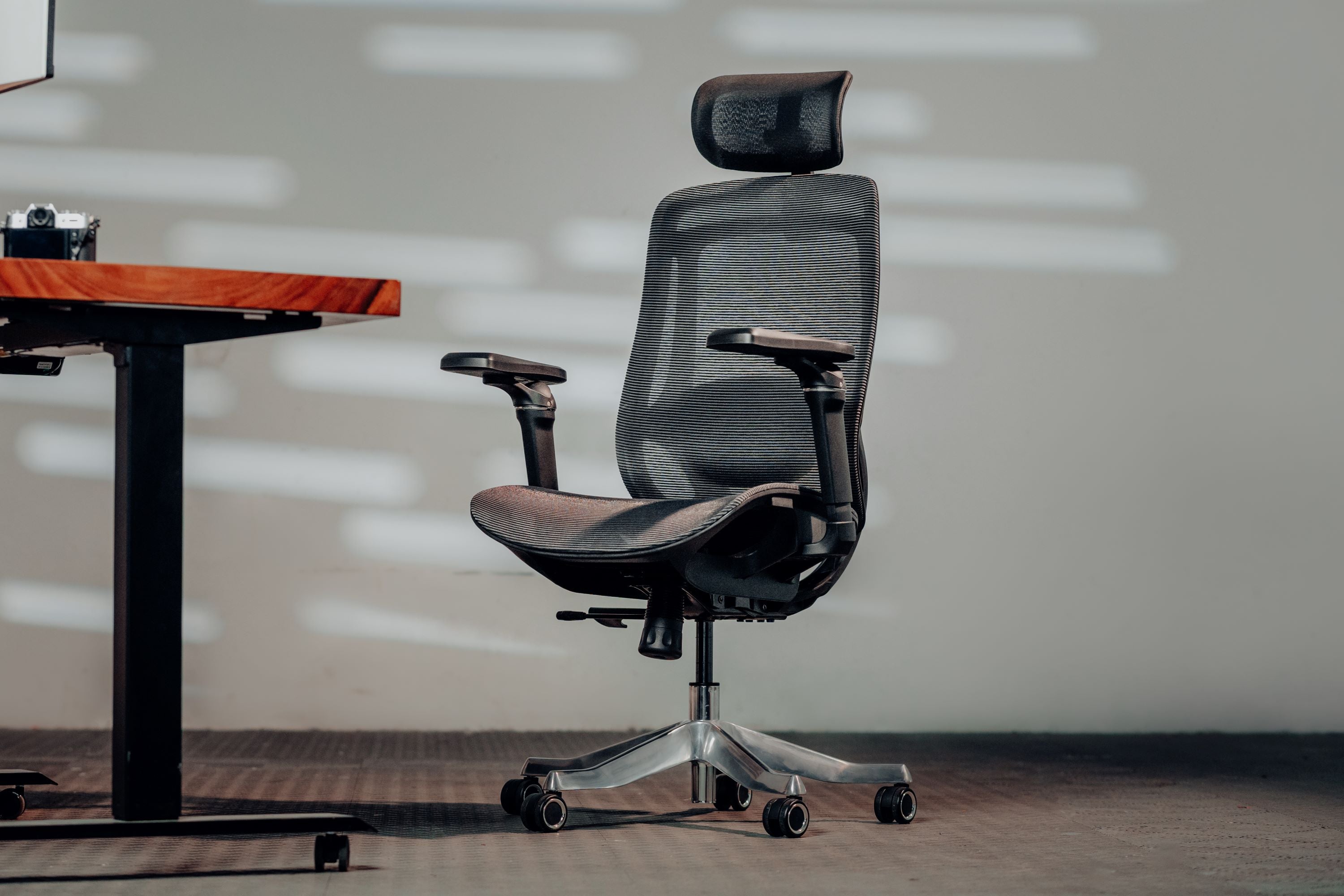
The biggest advantage that both Airy and Airy Pro share is their premium full-mesh design: from the headrest and backrest to the seat pan, all utilize high-quality mesh material specifically for ergonomic chairs. This creates an extremely breathable, lightweight, and comfortable feel, especially in hot and humid climates like Vietnam.
Imagine sitting for 6–8 hours continuously for work, and your back and thighs still feel cool and not stuffy – truly ideal and practical, especially for those who sweat easily. While Airy uses Aero Mesh, Airy Pro opts for Flow Mesh. In terms of features, the two mesh types don't differ significantly; most changes focus on the weave pattern to create different "textures" for the chairs.
If you're still unsure, visit HyperWork dealers, chains, or stores to experience and feel them firsthand. Because sometimes, just sitting for 2 minutes, you'll know which one is your ideal "companion."




Leave a comment
This site is protected by hCaptcha and the hCaptcha Privacy Policy and Terms of Service apply.