

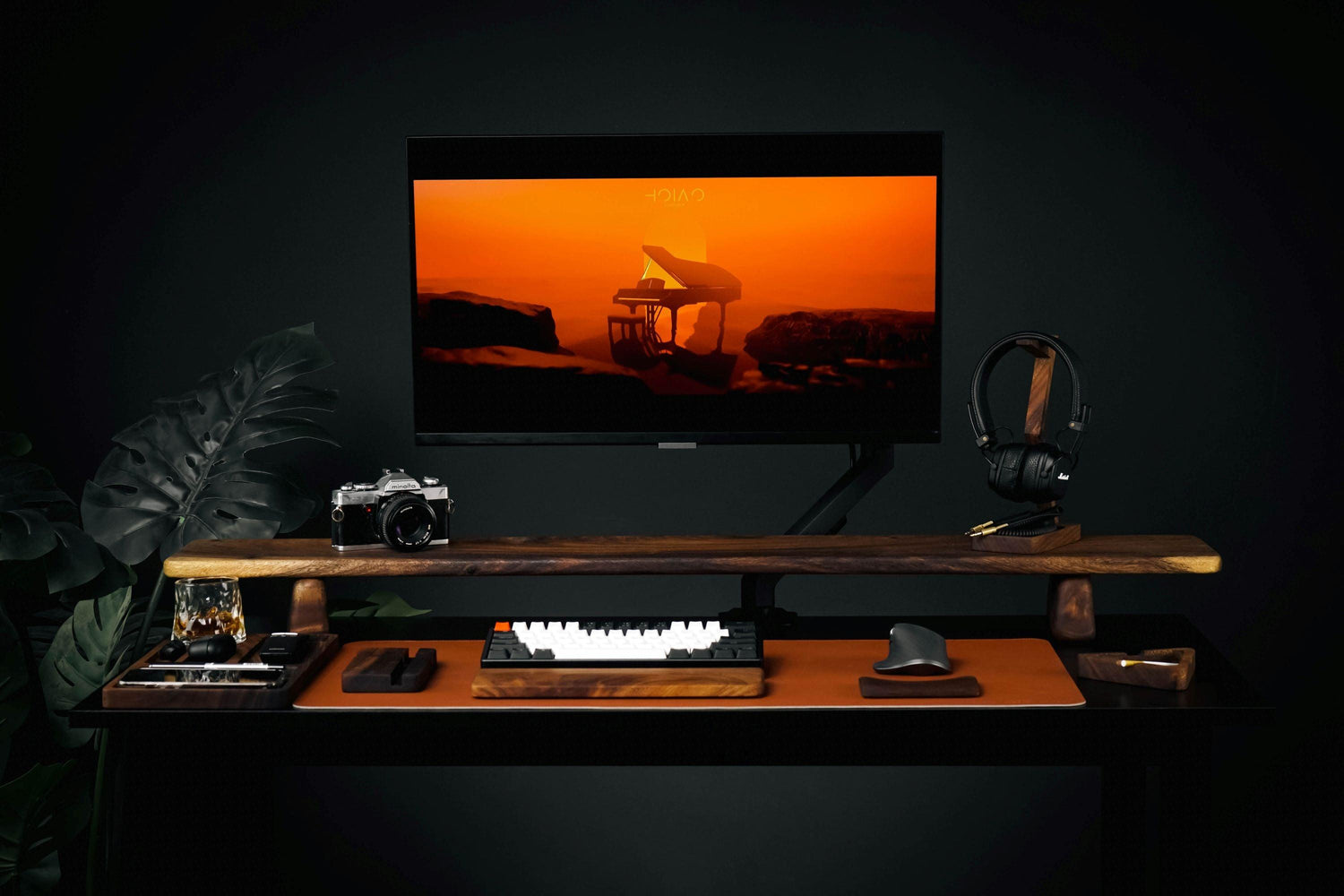
Balancing color elements in design and setup helps you create a pleasing, eye-catching, and impressive workspace for work, study, or entertainment. Why is that? Because color is one of the first elements that impacts and captivates human vision. The world of color, in general, is present everywhere, helping us express our thoughts and emotions clearly and subtly.
Therefore, before you start turning "from concept to reality" for your own space, try beginning with color and understanding the basic color principles.
HyperWork introduces the 60-30-10 rule, a classic principle in both graphic design and home interior design, which can be perfectly applied to designing your workspace. You can refer to it and implement it.

What is the 60-30-10 Rule?
This rule originates from balancing the 60-30-10 ratio for the three colors you choose for your setup. The dominant color will take up 60%, the secondary color 30%, and the accent color 10%.
How to apply the 60-30-10 rule?
Here are some things to keep in mind when applying this rule:
- Choose the color that occupies 60% of the setup: It's best to choose a neutral or light color as the dominant one to avoid overwhelming the space and to ensure that furniture, equipment, or accessories, especially small decor items, stand out.
- Choose the color that occupies 30% of the setup: This color should be darker than the 60% color but still quite neutral to avoid a cluttered look.
- Choose the color that occupies 10% of the setup: This should be the darkest color, used as an accent on accessories, equipment, or decor items.

Is the 60-30-10 rule the only principle for a beautiful setup?
Undeniably, applying color rules will help your setup have focal points while maintaining harmony and balance overall. However, creativity is limitless. You can still use more than three colors or different shades of the same color, thereby creating unique setups that reflect the owner's personality.
For example:
- When using four colors, you can divide the ratio into 60-15-15-10 for the dominant, secondary, and accent colors.
- When using different color shades, you can also adjust them according to the rule from darkest to lightest for each ratio.

- When still using three colors, you can also fine-tune the 60-30-10 ratio to 65-25-10 to create a slight difference while still achieving a perfect ratio for your setup.




Leave a comment
This site is protected by hCaptcha and the hCaptcha Privacy Policy and Terms of Service apply.